
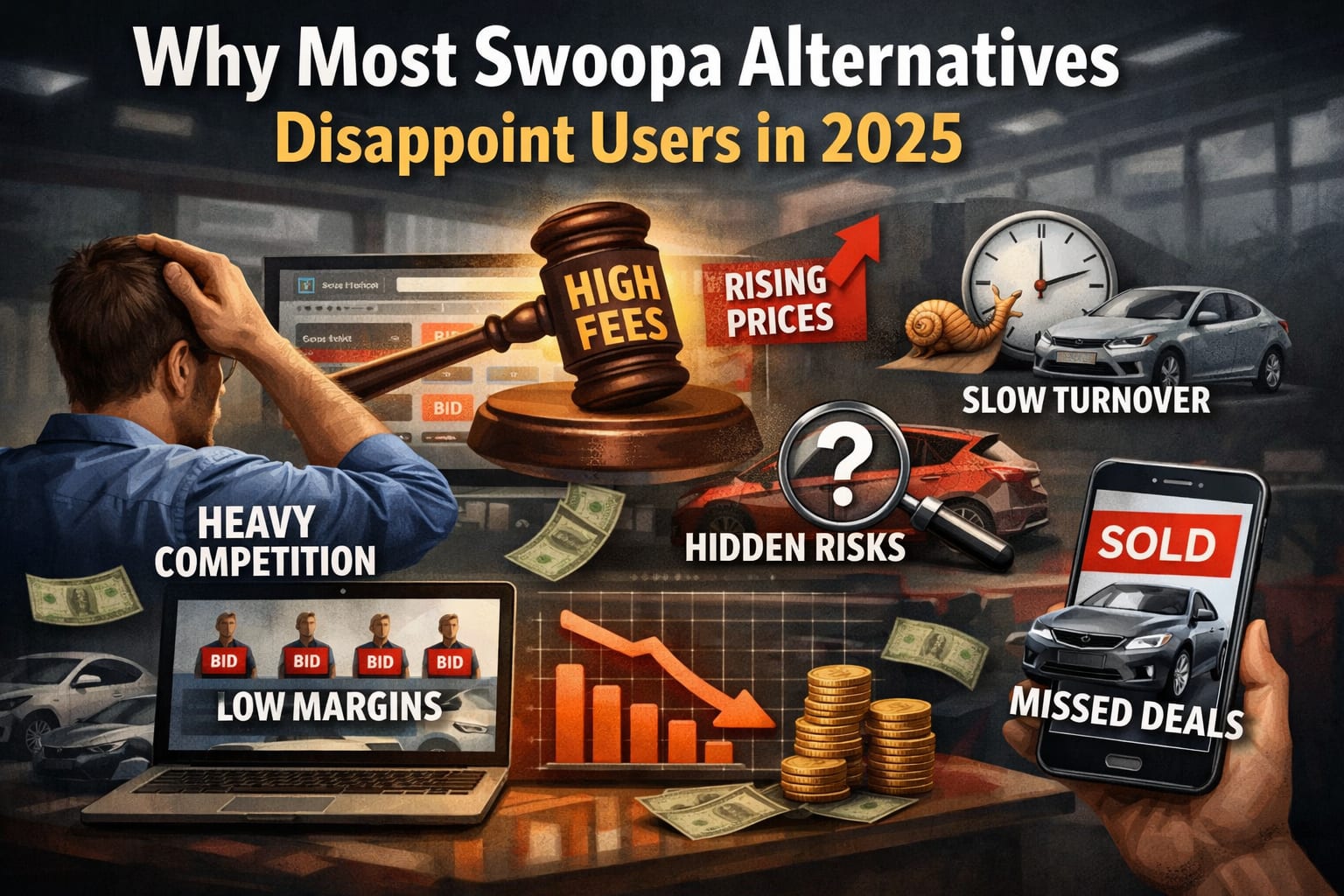
Why Most Swoopa Alternatives Disappoint Users in 2025
Dealers exploring a Swoopa alternative in 2025 are not wrong to look around. Inventory pressure, tighter margins, and faster retail cycles have pushed many dealers to evaluate multiple sourcing options before committing to a single platform.
On paper, many vehicle sourcing alternatives promise broad access, competitive pricing, and convenience. In practice, however, the experience often falls short of expectations. What looks like an opportunity at scale can turn into higher risk, slower acquisition, and shrinking margins once real-world conditions set in.
This article is not about criticizing individual platforms. Instead, it explains why many car sourcing platforms struggle to deliver consistent value for dealers — and why so many users end up disappointed after the initial trial phase. Understanding these limitations helps dealers make smarter, more informed sourcing decisions.
The Common Problem With Most Swoopa Alternatives
Across most vehicle sourcing alternatives, the same structural challenges appear again and again:
- Heavy dealer-to-dealer competition
- Pricing optimized by demand rather than opportunity
- Layered buyer fees are reducing margins
- Slower acquisition cycles
- Higher risk tied to unseen inventory
Many Swoopa competitors operate at scale, but scale alone does not create advantage. When thousands of professional buyers chase the same inventory, prices rise quickly and efficiency drops. The result is a system where speed matters, but true edge is difficult to achieve.
Where Auction-Based Platforms Fall Short
Auction platforms remain a common sourcing option, but they come with inherent trade-offs that impact profitability and predictability.
Manheim
Manheim offers large volumes and established processes, but buyers are competing directly against experienced professionals. Pricing reflects market demand quickly, leaving limited room for margin. Fees and transport costs further compress returns.
Copart
Copart provides access to damaged and salvage inventory. While useful for specific strategies, condition risk is high, inspections are limited, and reconditioning surprises are common.
IAAI
Similar to Copart, IAAI focuses heavily on non-retail-ready vehicles. Buyers often need specialized operations to manage risk, logistics, and repair timelines.
ACV Auctions
ACV introduces digital convenience and inspection reports, but bidding pressure remains intense. Vehicles frequently sell at prices reflecting dealer demand rather than underpriced opportunity.
Adesa
Adesa blends physical and online auctions, but the same auction dynamics apply. Competitive bidding, buyer fees, and limited differentiation make it difficult to consistently source undervalued vehicles.
Across all auction-based models, dealers face:
- Rising prices due to professional competition
- Fees that reduce net margin
- Limited test drives or post-sale flexibility
- Inventory that many dealers have already evaluated and passed on
These are structural issues, not platform failures.
AutoTempest: Broad Search, Limited Advantage
AutoTempest is often evaluated as a sourcing tool because it aggregates listings from multiple marketplaces. While this broad visibility is helpful for research, it does not create a competitive edge.
AutoTempest:
- Does not provide early access to listings
- Does not reduce buyer competition
- Does not surface underpriced vehicles first
Every user sees the same inventory at the same time. Speed still depends entirely on manual effort, constant monitoring, and fast outreach. For dealer vehicle sourcing, this means time investment increases without guaranteeing better outcomes.
Why These Alternatives Often Disappoint Dealers
Many dealers approach online car marketplaces for dealers, expecting faster access and better deals. The reality is more nuanced.
Common gaps between expectation and reality include:
- Promised ≠ profitable access – Just because a platform offers a large inventory doesn’t mean the vehicles are priced for margin. Listings often reflect market-driven competition rather than undervalued opportunities.
- Inventory volume ≠ inventory quality – High volume can mask condition issues, incomplete histories, or vehicles with hidden maintenance costs. Dealers must still vet every listing carefully.
- Convenience ≠ margin protection – Features like search filters, alerts, and online bidding save time, but they do not guarantee savings or profitability.
Additional challenges dealers face:
- High competition compresses spreads – Multiple professionals bidding on the same vehicles quickly drives prices toward market parity, reducing potential profit.
- Unexpected reconditioning costs – Cosmetic, mechanical, or safety-related issues frequently appear after purchase, cutting into projected margins.
- Slower time-to-lot – Even with online access, vehicles may require transport, inspection, or prep before sale, delaying cash flow.
Over time, experienced dealers understand that simply having access to listings is not enough. True sourcing advantage comes from combining speed, insight, and risk mitigation — elements that most generic platforms fail to provide consistently.
What Dealers Actually Need (and Don’t Get) From Most Alternatives
Dealers evaluating the best alternatives to Swoopa are usually searching for specific advantages that many platforms fail to deliver consistently. Simply put, access alone does not create a competitive edge — dealers need tools that provide speed, insight, and strategic advantage.
What is often missing from typical platforms:
- Early access to mispriced vehicles – Many systems only display listings after competition has already driven prices upward, leaving dealers with thin margins.
- Speed advantages beyond manual monitoring – Manual tracking of listings across multiple marketplaces is slow and labor-intensive, often allowing other buyers to claim opportunities first.
- Private-party sourcing at scale – Access to off-market or under-the-radar listings can make the difference between a profitable acquisition and a missed opportunity.
- Lower-risk inventory profiles – Standard platforms often lack transparent condition reports or detailed histories, increasing uncertainty and potential reconditioning costs.
- Faster inventory turn – Without tools to quickly identify and secure profitable vehicles, dealers may see slower time-to-lot, affecting cash flow and operational efficiency.
Most car sourcing platforms are designed around exposure rather than advantage. When every buyer has equal access, the system prioritizes volume and speed over margin and strategy. This often leaves dealers chasing listings rather than sourcing vehicles with calculated profit potential, creating a reactive rather than proactive purchasing process.
Why Dealers Keep Testing Alternatives Anyway
Despite the limitations, dealers continue to explore alternatives. This behavior is understandable and rooted in real pressures.
Common reasons include:
- Ongoing inventory shortages
- Fear of missing out on better options
- Legacy habits tied to auctions and brokers
- Lack of clearly differentiated solutions
This cycle leads many dealers to rotate between platforms without achieving consistent sourcing success. Understanding why dealers look for Swoopa alternatives helps explain this pattern without oversimplifying it.
How This Leads Dealers Back to Purpose-Built Platforms
Over time, dealers recognize that long-term sourcing performance depends on structural advantages, not just inventory access.
Platforms designed around:
- Speed of response
- Private-party access
- First-response advantage
tend to perform better because they reduce competition pressure rather than amplify it. Unlike traditional auctions or broad aggregators, these systems focus on opportunity timing and sourcing efficiency.
This shift explains why auction sourcing fails dealers when margins tighten and speed becomes critical.
FAQs
There are several sourcing options available, but most come with trade-offs related to competition, pricing efficiency, and inventory risk. Dealers often need to balance volume against margin when evaluating alternatives.
Auction platforms fail not because they lack inventory, but because competitive bidding, fees, and limited flexibility compress margins and slow acquisition cycles for many dealers.
AutoTempest is useful for market research, but it does not provide speed advantages or reduce competition. Dealers still rely on manual effort to secure inventory.
High competition, optimized pricing, and rising costs make it difficult to consistently find underpriced vehicles in traditional marketplaces.
Dealers should prioritize speed, early access, pricing transparency, and reduced competition when evaluating sourcing platforms.
Final Thoughts
Most vehicle sourcing alternatives disappoint users not because of branding or intent, but because of structural limitations. Auction dynamics, broad exposure models, and fee-heavy systems favor efficiency over opportunity.
As sourcing conditions tighten in 2025, dealers increasingly recognize that access alone is not enough. Platforms must provide timing advantages, lower risk, and faster paths to inventory turnover.
This reality explains why many dealers cycle through alternatives before settling on solutions built specifically for modern sourcing challenges. Rather than hype, the evolution toward purpose-built platforms reflects practical needs shaped by experience, data, and long-term performance.
You May Like
Why Most Swoopa Alternatives Disappoint Users in 2025
In 2025, online flipping has evolved from a casual side hustle into a full-blown digital economy. It’s a movement where everyday people are turning used items, clearance deals, and even digital
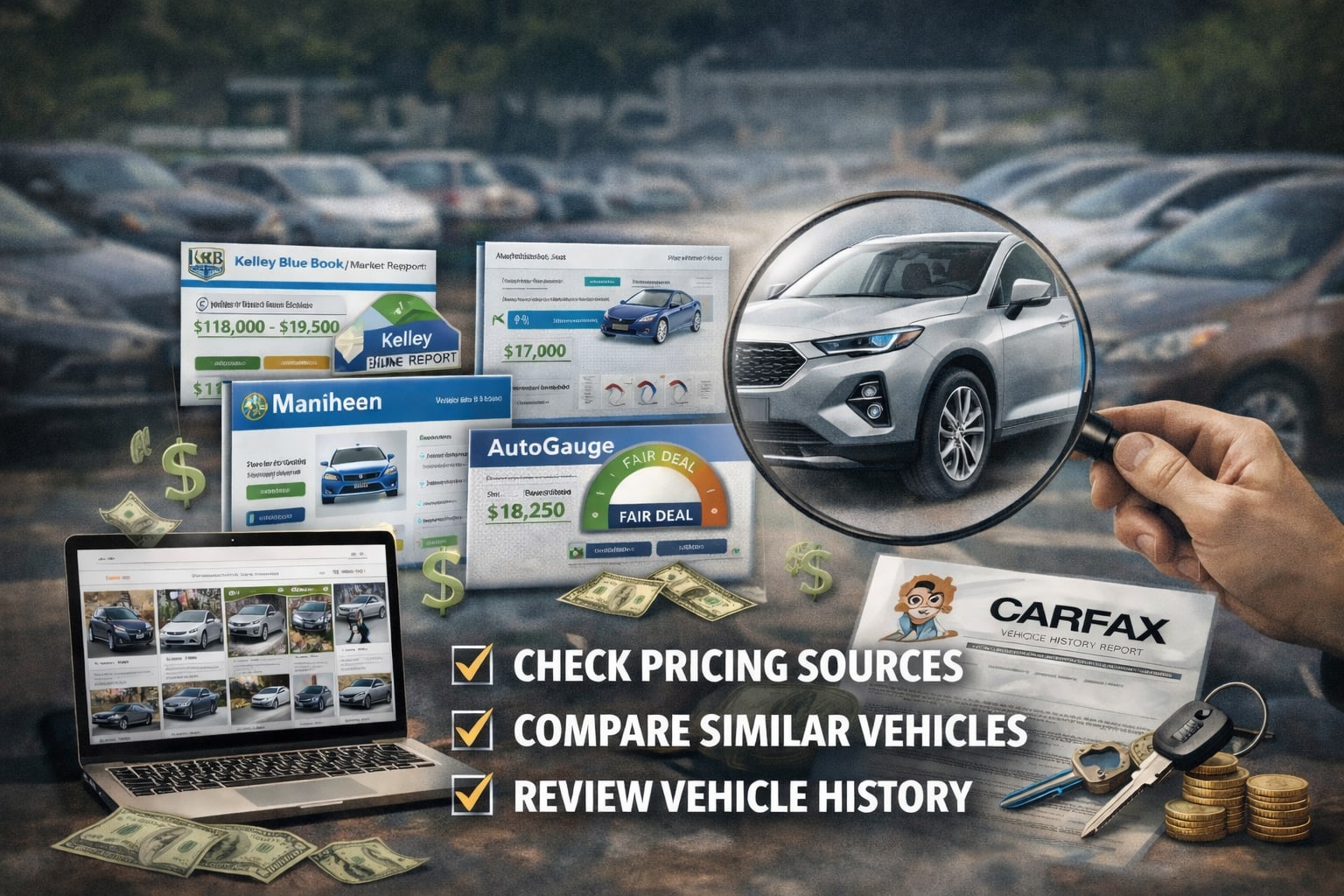
How to Evaluate a Vehicle’s True Value Before Buying
In 2025, online flipping has evolved from a casual side hustle into a full-blown digital economy. It’s a movement where everyday people are turning used items, clearance deals, and even digital
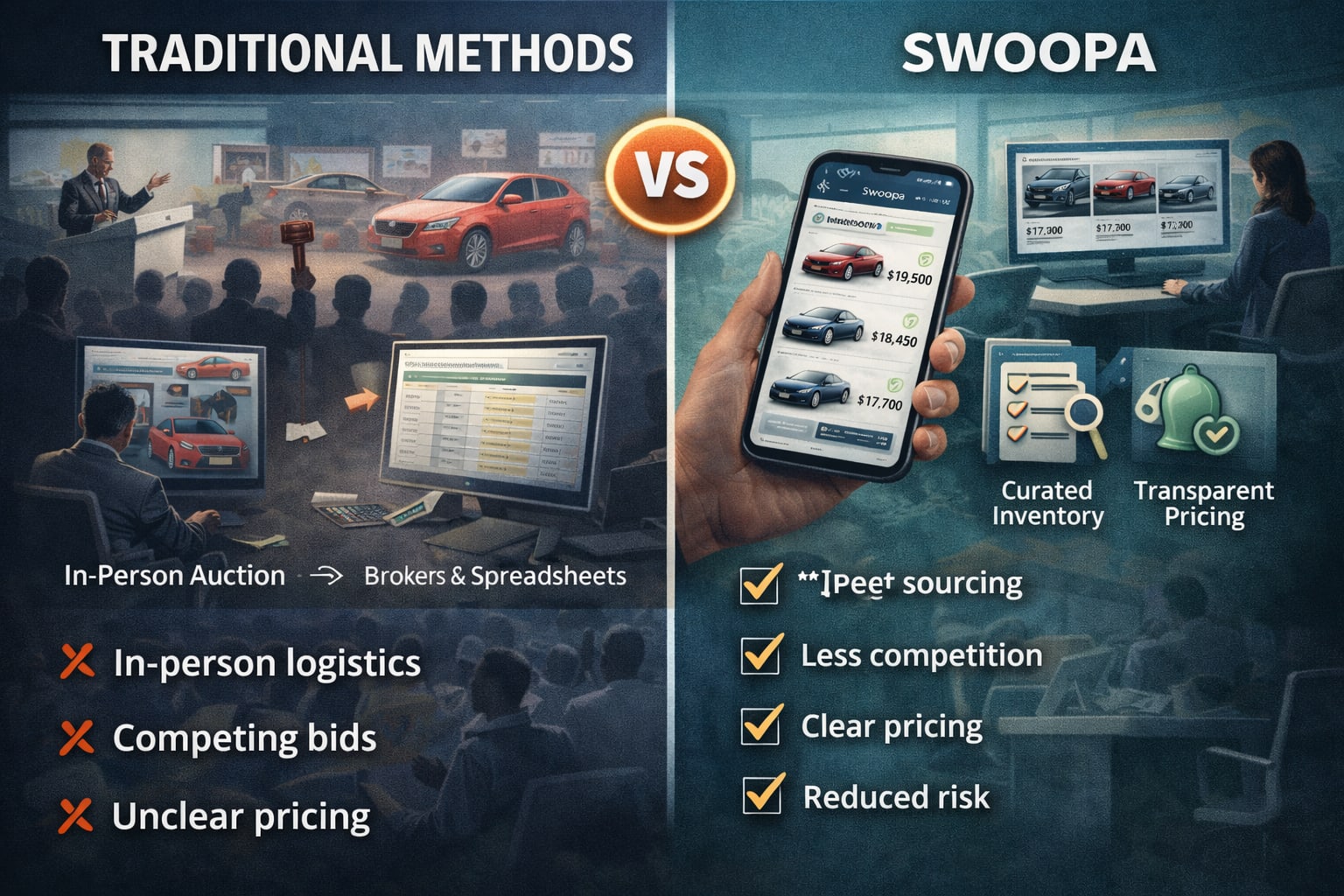
Swoopa vs Other Alternatives: A Smarter Way to Source Vehicles
In 2025, online flipping has evolved from a casual side hustle into a full-blown digital economy. It’s a movement where everyday people are turning used items, clearance deals, and even digital