
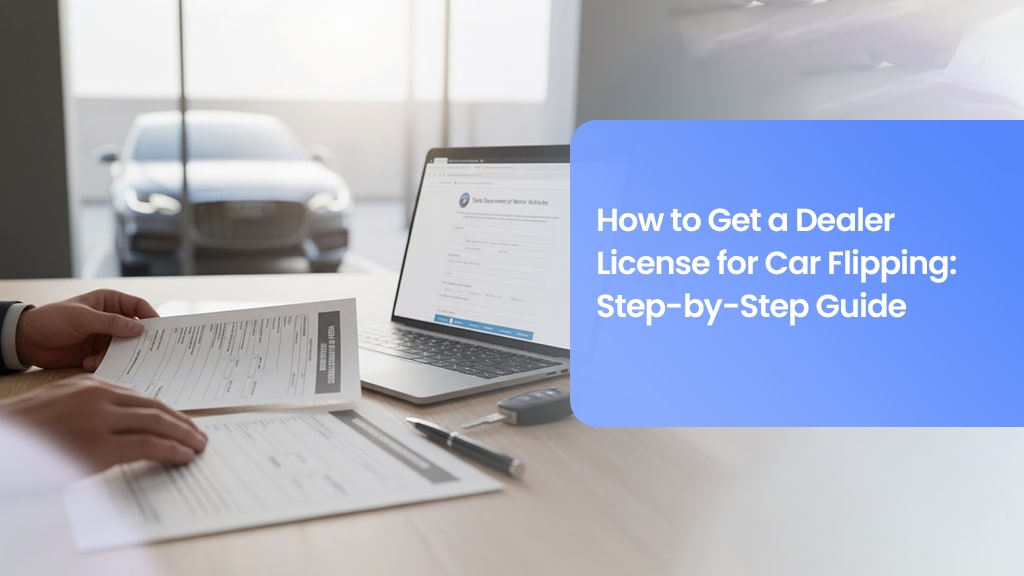
How to Get a Dealer License for Car Flipping: Step-by-Step Guide
Flipping cars can be a profitable side hustle or even a full-time business, but many new resellers quickly discover that selling too many vehicles without the right paperwork can cause legal trouble. In most states, there are strict limits on how many cars you can sell per year without a license, and exceeding that number can result in fines, penalties, or even a ban on future car sales. That’s why learning how to get a dealer license for car flipping is one of the most important steps for anyone serious about turning car resales into a long-term business.
With a license, flippers gain access to dealer-only auctions, wholesale prices, and legal protection. Instead of worrying about breaking local rules, you can focus on sourcing undervalued vehicles, negotiating better deals, and maximizing profits. Beyond legal safety, a dealer license also makes you look more professional, opening the door to better partnerships and financing options.
This guide walks you through everything you need to know—from USA requirements for car dealer license and costs, to step-by-step instructions and alternatives if you’re not ready for a full license. Whether you’re just starting or ready to scale, this breakdown will help you flip cars the right way.
Do You Need a Dealer License to Flip Cars in the USA?
One of the first questions new resellers ask is whether they actually need a license to flip cars. The answer depends on state rules, but in most cases, if you plan to buy and sell more than just a handful of vehicles each year, a dealer license is required. Without it, you risk violating car resale permits & regulations, which can result in heavy fines or even the suspension of your right to sell cars altogether.
In many states, individuals can sell between 3 to 5 cars per year without a license, provided the sales are personal and not for profit. Once you go beyond that limit, you’re operating as a business in the eyes of the law. At this stage, getting a license isn’t optional—it’s essential for staying compliant and protecting your operation.
This is where a car flipping business license guide becomes critical. Each state has slightly different thresholds and processes, so it’s important to check with your local DMV or licensing authority. For example, California may allow only a few private sales before requiring registration, while Texas or Florida might have slightly different limits. Understanding these differences up front helps you avoid legal pitfalls and prepares you to flip cars legally at scale.

Types of Dealer Licenses in the USA
When people ask, do you need a license to flip cars, the answer often comes down to what type of license fits your business model. Not all dealer licenses are the same, and choosing the right one is essential for building a compliant and profitable car flipping business startup. Here are the main categories in the United States:
Retail Dealer License
This allows you to sell directly to the public. With a retail license, you can operate a dealership, advertise vehicles, and handle financing. It’s the best option if you plan to interact with end customers regularly.
Wholesale Dealer License
Wholesale licenses restrict sales to other licensed dealers and auctions. You can’t sell directly to the public, but you’ll gain access to dealer-only auctions and bulk inventory sources. This is often the starting point for many flippers who want to avoid the costs of running a retail lot.
Auto Broker License
In some states, you can apply for a broker license, which allows you to connect buyers with sellers for a fee. While less common in the flipping world, it can be an alternative path if you want to earn without holding large amounts of inventory.
Each license type has unique rules and benefits. Your choice depends on whether you want to flip casually through auctions or establish a customer-facing dealership.
Requirements to Get a Dealer License (USA)
Before you can start flipping cars at scale, you’ll need to meet specific requirements set by your state’s licensing authority. These rules ensure that anyone entering the auto industry follows proper business practices and can buy and sell cars legally. While details vary by state, the following are the most common criteria:
- Business Registration
You’ll need to register your business as an LLC, corporation, or sole proprietorship. This establishes your car flipping operation as an official business entity. - Physical Location or Office
Most states require a commercial office or lot that meets zoning rules. Some even mandate signage, phone lines, and display space for vehicles. - Surety Bond & Insurance
A surety bond protects customers in case of fraud, while liability insurance covers accidents and damages. Bond amounts vary by state, typically ranging from $10,000 to $100,000. - Background Check
State DMVs will conduct a criminal background check to ensure applicants have no history of auto-related fraud or serious crimes. - Dealer Education (if required)
Some states require completion of an education course before approval.
Meeting these requirements is one of the crucial steps to getting a car dealer license approval. Once you’ve satisfied them, you’ll be ready to move on to the application and inspection process.
Step-by-Step Guide to Getting a Dealer License for Car Flipping
Getting licensed may sound complex, but breaking it down into a clear process makes it much easier to follow. Below is a straightforward roadmap that covers the most common steps to get a car dealer license approval across the United States:
- Register Your Car Flipping Business
Choose a legal structure (LLC, corporation, or sole proprietorship) and file with your state. - Decide on License Type
Choose between retail, wholesale, or broker, depending on how you plan to sell. - Meet Zoning & Office Requirements
Secure a commercial location or office that complies with local zoning laws. - Obtain a Surety Bond & Insurance
Purchase the required bond amount for your state and get liability coverage. - Complete Education Requirements
If your state requires a dealer training program, enroll and finish the course. - File Your DMV or State Application
Submit your DMV dealer license application with supporting documents. - Pay Fees & Pass Inspection
Each state charges different fees, so always confirm upfront how much a dealer license costs in the USA. Fees usually include the application, background check, and inspection.
Following these steps ensures you’re legally ready to buy from auctions, resell cars for profit, and grow your flipping operation without compliance issues.
Costs Involved in Getting a Car Dealer License
The cost of getting licensed varies significantly depending on your state, but understanding the breakdown will help you budget properly. While the investment may seem high at first, it’s the price of flipping cars legally in the USA without risking fines or penalties.
- State License Fees
Each state sets its own application and licensing fees, usually ranging from $200 to $1,500. - Surety Bond Costs
Bonds are mandatory under most auto dealer license laws USA. The amount depends on your state, with typical requirements between $10,000 and $100,000. The actual cost to you (the premium) is usually a percentage, often between $100 and $1,000 annually. - Office or Lot Expenses
If your state requires a physical office or display lot, you’ll need to account for rent, utilities, and signage. - Education & Background Check Fees
Dealer training courses (in states that require them) may cost $150–$300, while background checks often add another $50–$100. - Total Estimated Costs
In most cases, the full setup cost for a license ranges from $1,000 on the low end to $10,000+ for states with strict requirements.
Although this is a significant upfront expense, it pays off by giving you legal access to auctions, more inventory, and greater profit opportunities.
Benefits of Having a Dealer License for Car Flipping
Securing a license isn’t just about following the law—it comes with real advantages that can boost your flipping profits. Once your DMV dealer license application is approved, you’ll gain benefits that private sellers simply don’t have access to.
- Access to Dealer-Only Auctions
Licensed dealers can attend exclusive auctions where vehicles are sold at wholesale prices. This alone can make a huge difference in your profit margins. - Legal Protection
By meeting the car dealer license USA requirements, you’re operating within state regulations, reducing the risk of fines or penalties. It also reassures buyers that they’re dealing with a legitimate business. - Higher Profit Potential
With access to cheaper vehicles and more inventory, licensed flippers can scale faster and earn more per deal compared to unlicensed sellers. - Tax Advantages
Operating as a licensed dealer allows you to claim business expenses, including vehicle repairs, office costs, and insurance. - Professional Credibility
A license makes your operation look official, helping you build partnerships, secure financing, and attract repeat buyers.
In short, a dealer license transforms car flipping from a risky side hustle into a scalable and legitimate business opportunity.
Common Challenges in Getting a Dealer License
While the benefits are clear, obtaining a license isn’t always simple. Many flippers run into obstacles during the application process, especially if they’re new to the industry.
- State-Level Differences
Each state has unique rules, which can make navigating car resale permits & regulations confusing. For example, some states require on-site inspections while others emphasize education programs. - Costly Setup
Even with a wholesale dealer license, you may need to rent office space, purchase a surety bond, and pay multiple fees before approval. These expenses can be intimidating for small flippers just starting. - Long Approval Process
Submitting your paperwork and waiting for a response can take months. Even with a clear car flipping business license guide, delays are common if your documents aren’t perfect. - Zoning and Location Requirements
Not all areas allow car sales businesses. Finding a compliant office or lot that meets your state’s rules is often one of the hardest steps.
Despite these challenges, careful preparation and a clear understanding of your state’s laws can help you avoid delays and get licensed faster.
Alternatives to a Dealer License
Not every flipper is ready to go through the full process of learning how to get a dealer license for car flipping, especially when considering the costs and regulations involved. Fortunately, there are practical alternatives.
- Partner with Licensed Dealers
Many licensed dealers allow individuals to operate under their umbrella. This can provide auction access without personally handling all compliance steps. - Use Third-Party Auction Access
Some companies grant temporary access to dealer-only auctions for a fee. While not as flexible as having your own license, this option allows you to buy and sell legally without committing to the full setup. - Flip Limited Cars Without a License
In most states, you can sell a small number of cars per year without needing a license. This is ideal for testing a car flipping business startup before investing heavily. - Lease or Share Business Space
Instead of renting your own office, you may be able to share a location with an established dealer to cut costs.
These alternatives don’t eliminate the eventual need for licensing, but they provide stepping stones for flippers still exploring the business. Before making a decision, weigh the costs—knowing how much a dealer license costs in the USA compared to these workarounds helps determine the right path for your budget.
By understanding local car resale permits & regulations, you’ll stay compliant and avoid unnecessary risks while building your flipping strategy.
Retail vs Wholesale Dealer License: Which is Better for Car Flipping?
Feature | Retail Dealer License | Wholesale Dealer License |
Who You Can Sell To | Directly to the public (retail buyers) | Only to other licensed dealers or through auctions |
Best For | Flippers wanting to sell cars locally for higher margins | Flippers focusing on quick transactions via dealer auctions |
Cost | Higher startup costs due to office, display lot, and compliance requirements | Lower initial costs, but you can’t sell directly to retail customers |
Requirements | Business location, signage, surety bond, insurance, DMV inspection | Office space (sometimes shared), surety bond, insurance |
Profit Potential | Higher resale profits per vehicle since you sell directly to end buyers | Lower per-car margins but faster turnover through bulk flips |
Regulations | Must comply with stricter auto dealer license laws USA and car resale permits & regulations | Fewer retail regulations, easier to manage, but a limited buyer pool |
License Example | A California Retail Dealer License lets you run a public-facing dealership | Texas wholesale dealer license grants auction access without a showroom |
If your goal is to maximize profits and buy and sell cars legally to everyday customers, a retail dealer license is worth the investment. However, if you want to run a leaner car flipping business startup and focus on auction flipping, the wholesale dealer license offers faster, lower-cost entry.
State-Specific Dealer License Examples: California vs Texas
California Dealer License Requirements
In California, car flippers face some of the most detailed state-level rules. To get a dealer license, you must:
- Complete a DMV dealer license application and attend a mandatory dealer education program.
- Secure a permanent office and display area that meets local zoning requirements.
- Obtain a surety bond (minimum $50,000) and liability insurance.
- Pass a background check and inspection from the California DMV.
The process is more expensive and time-consuming, but the benefit is that licensed flippers gain direct access to auctions and can sell to both retail and wholesale buyers.
Texas Dealer License Requirements
Texas makes the process somewhat easier, especially for wholesale dealers. Key steps include:
- Filing your car dealer license USA requirements through the Texas DMV eLICENSING system.
- Choosing between a retail or wholesale dealer license, depending on whether you’ll sell to the public or only other dealers.
- Providing proof of a business office, signage, and compliance with zoning rules.
- Posting a surety bond (minimum $25,000).
Texas offers a faster turnaround time, and wholesale flippers often find it easier to set up here compared to California.
Comparison Insight:
California emphasizes stricter consumer protection through higher costs and regulations, while Texas is more flexible for smaller car flippers or startups. Understanding these state variations helps you plan your car flipping business license guide more effectively.
Final Thoughts
Flipping cars can be a profitable side hustle or even a full-scale business, but doing it without the right license puts you at legal risk. Securing a dealer license ensures you can buy and sell cars legally, gain access to dealer-only auctions, and operate with confidence. While the process may seem overwhelming—dealing with car resale permits & regulations, insurance, bonds, and inspections—the long-term rewards outweigh the initial costs.
Each state in the USA has its own set of rules, but the core steps remain similar: register your business, choose the right license type (retail or wholesale), meet zoning requirements, and file your DMV dealer license application. Once licensed, you’ll not only reduce legal risks but also maximize profit potential by accessing more vehicles and flipping opportunities.
If you’re serious about turning car flipping into a sustainable business, treat your license as an investment. It’s the gateway to higher margins, greater inventory, and a professional edge in a competitive market. Pairing a dealer license with smart AI-driven tools can further boost your ability to spot undervalued cars before others. Platforms like Swoopa provide real-time alerts, resale value predictions, and access to undervalued listings—giving you the competitive edge to flip smarter and faster.
Ready to flip cars the right way? Get licensed, stay compliant, and let Swoopa help you uncover the best car deals before anyone else.
FAQs
The number varies by state, but in most cases, you can only sell 3–5 cars per year without a license. Selling more may require following your state’s car resale permits & regulations.
The cost depends on the state. On average, fees range between $1,000–$10,000 when you factor in application fees, surety bonds, and office requirements. Guides on how much a dealer license costs in the USA can give state-specific estimates.
Yes, if you want to flip more than the state’s unlicensed limit. Having a license ensures you can buy and sell cars legally without risking fines or penalties.
In most states, no. You’ll typically need a commercial business location that complies with zoning laws. Always consult a car flipping business license guide for your specific state.
A wholesale dealer license is usually cheaper and grants access to dealer auctions, but you can only sell to other dealers. A retail license lets you sell directly to the public, though it involves more regulations and higher costs.
You May Like
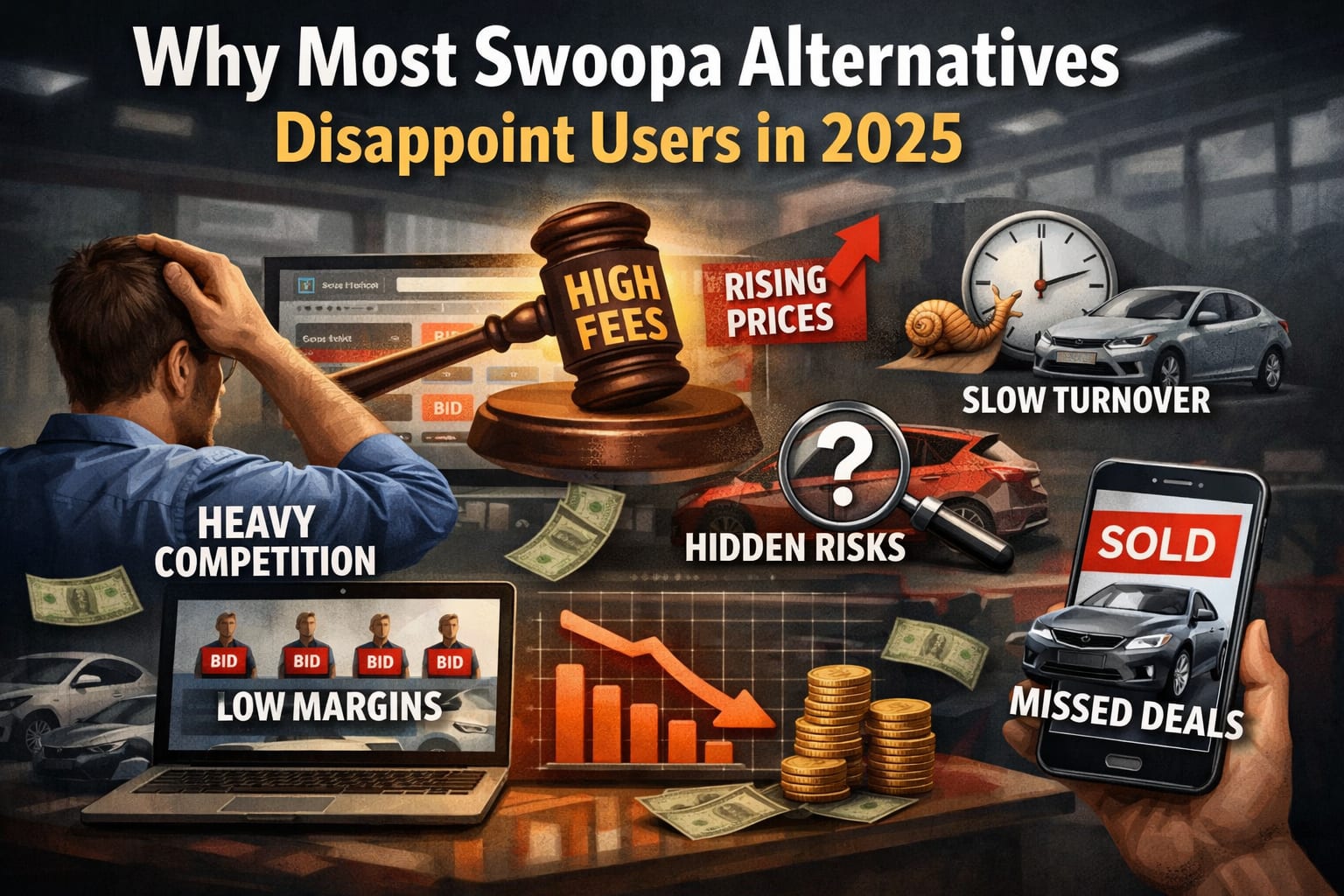
Why Most Swoopa Alternatives Disappoint Users in 2025
In 2025, online flipping has evolved from a casual side hustle into a full-blown digital economy. It’s a movement where everyday people are turning used items, clearance deals, and even digital
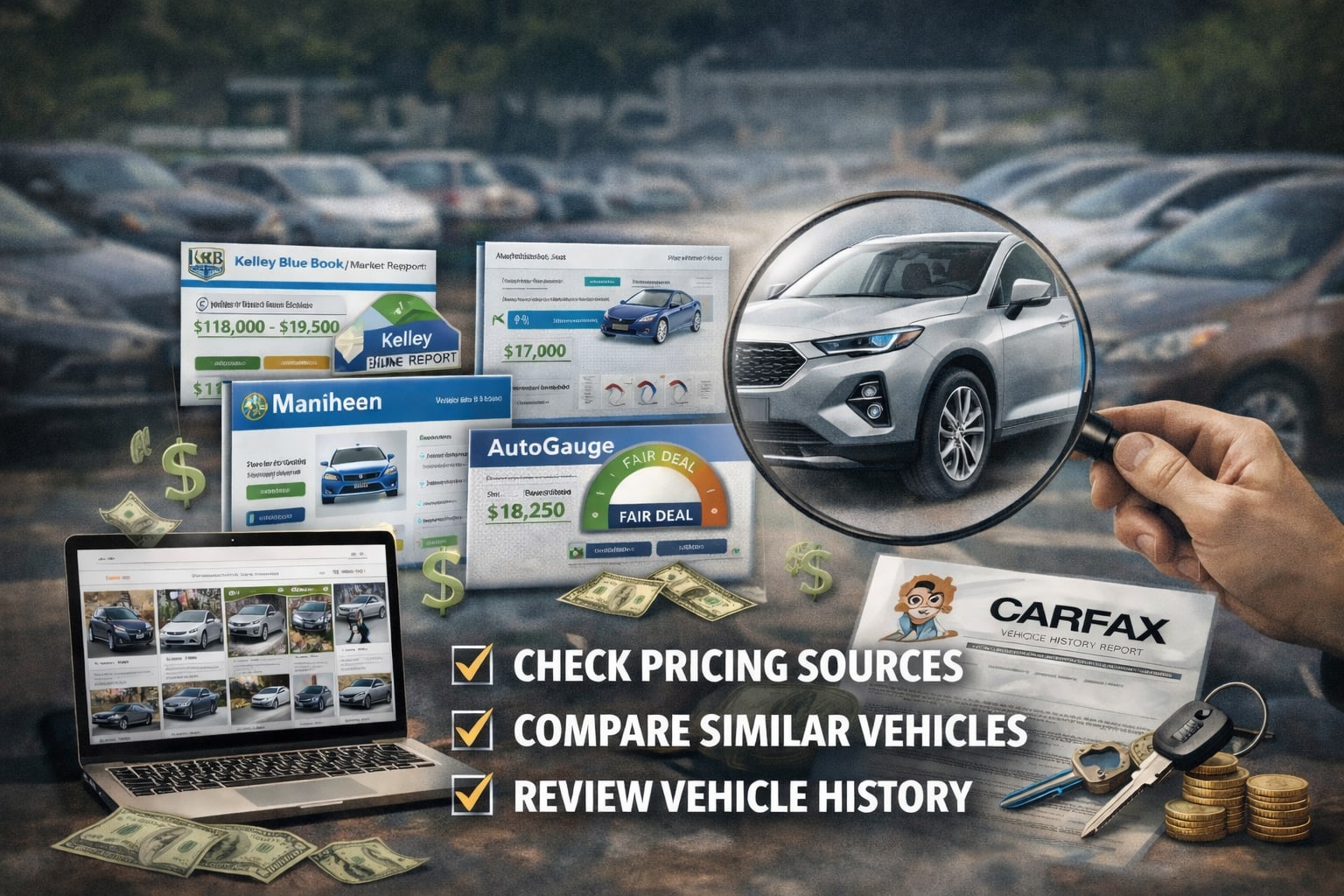
How to Evaluate a Vehicle’s True Value Before Buying
In 2025, online flipping has evolved from a casual side hustle into a full-blown digital economy. It’s a movement where everyday people are turning used items, clearance deals, and even digital
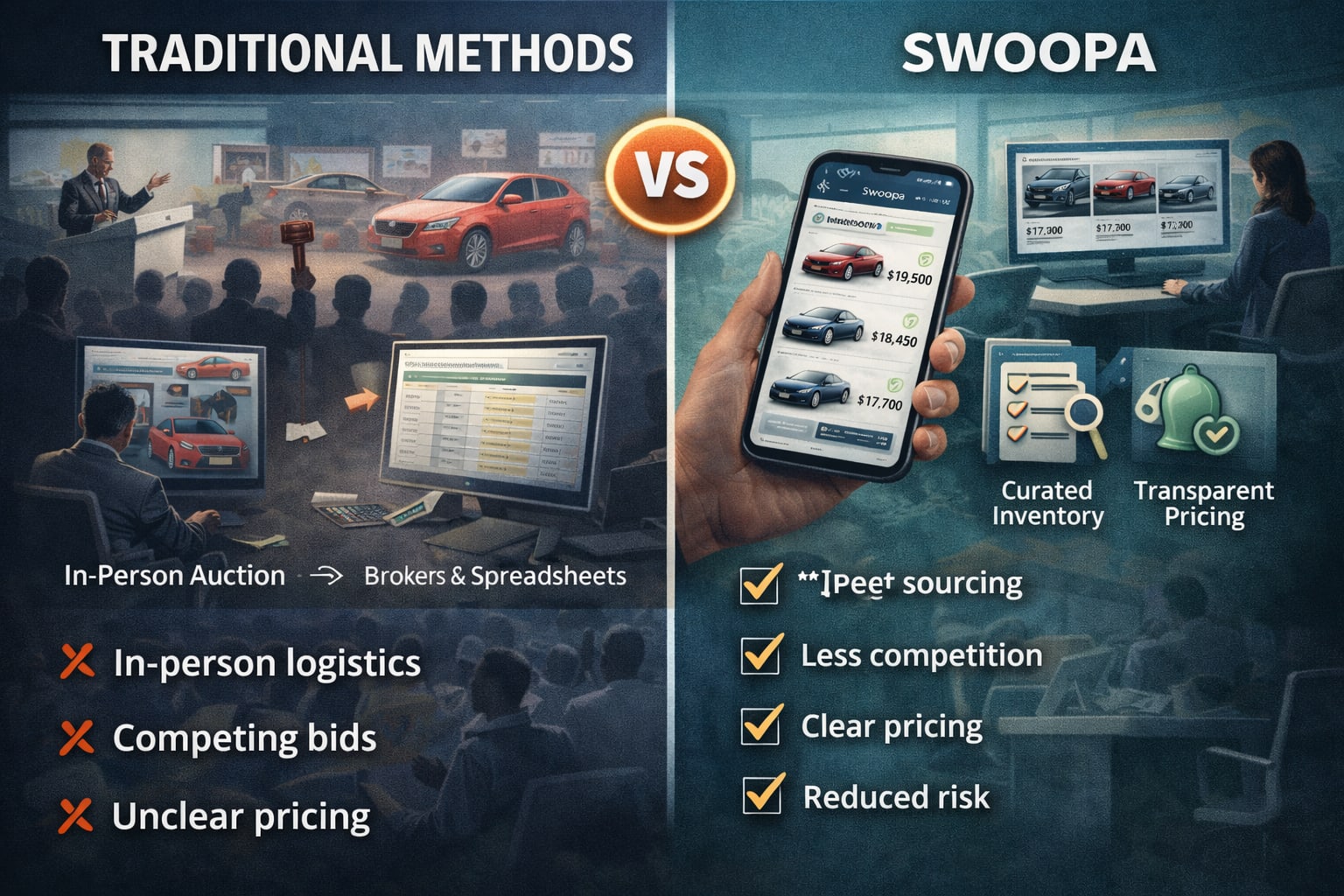
Swoopa vs Other Alternatives: A Smarter Way to Source Vehicles
In 2025, online flipping has evolved from a casual side hustle into a full-blown digital economy. It’s a movement where everyday people are turning used items, clearance deals, and even digital