
How to Evaluate a Vehicle’s True Value Before Buying
Understanding a vehicle’s true worth before making a purchase is one of the most important steps a buyer can take. Whether you are sourcing inventory, upgrading a personal vehicle, or comparing options across marketplaces, accurate vehicle valuation protects you from overpaying and absorbing hidden costs later.
Many buyers rely solely on asking prices, but this number rarely tells the full story. Location, demand, condition, and market timing all influence a vehicle’s actual worth. Without proper research, it’s easy to mistake a well-marketed listing for a fair deal.
Smart buyers take a data-driven approach. They compare multiple pricing sources, study market behavior, and evaluate real-world transaction data before committing. Knowing the difference between list price and true value helps buyers negotiate confidently, budget accurately, and make decisions based on facts rather than pressure.
This guide explains how to evaluate a car’s value properly, what factors influence pricing, and how to combine multiple data sources to determine what a vehicle is truly worth before buying.
Understand Market Value vs. True Value
Before diving into research, it’s important to understand the difference between market value and true vehicle value.
Market value refers to what similar vehicles are currently listed or sold for within a specific market. This number fluctuates based on demand, seasonality, and regional trends.
True vehicle value goes deeper. It reflects what a specific vehicle is actually worth after considering condition, mileage, ownership history, and local buyer behavior.
Pricing can vary significantly based on:
- Location: Urban markets often show higher pricing than rural areas.
- Demand: Popular models or fuel-efficient vehicles command higher values.
- Condition: Two identical vehicles can differ in value due to wear, maintenance, or history.
Understanding this difference helps buyers interpret pricing data instead of accepting it at face value.
Key Factors That Affect a Vehicle’s True Value
Mileage & Usage
Mileage plays a major role in depreciation. Higher mileage generally reduces value, but usage patterns matter just as much.
A well-maintained vehicle with higher highway mileage may retain more value than a low-mileage vehicle used heavily in stop-and-go traffic. Buyers evaluating car value before buying should always consider mileage in context, not isolation.
Vehicle Condition
Condition directly impacts resale potential and ownership costs. Buyers should evaluate:
- Exterior condition (paint, dents, rust)
- Interior wear (seats, electronics, trim)
- Mechanical health (engine, transmission, brakes)
Inspection reports provide objective insight and help validate asking prices when evaluating used car value.
Accident & Ownership History
Accident history, title status, and number of previous owners influence long-term value.
Vehicles with clean titles and consistent ownership histories typically command stronger resale value. History reports help buyers understand risk and prevent paying inflated prices.
Make, Model & Year
Brand reliability, model popularity, and production year affect depreciation curves. Some models retain value better due to durability, while others depreciate faster due to maintenance costs or declining demand.
Understanding these patterns helps buyers answer the question: how much is a car worth relative to its segment?
Service & Maintenance Records
Documented maintenance increases confidence and value. Vehicles with detailed service histories often justify higher pricing because future repair risk is reduced.
How to Research a Vehicle’s True Value Online
Evaluating true value requires comparing multiple sources, not relying on a single estimate.
Smart buyers cross-check:
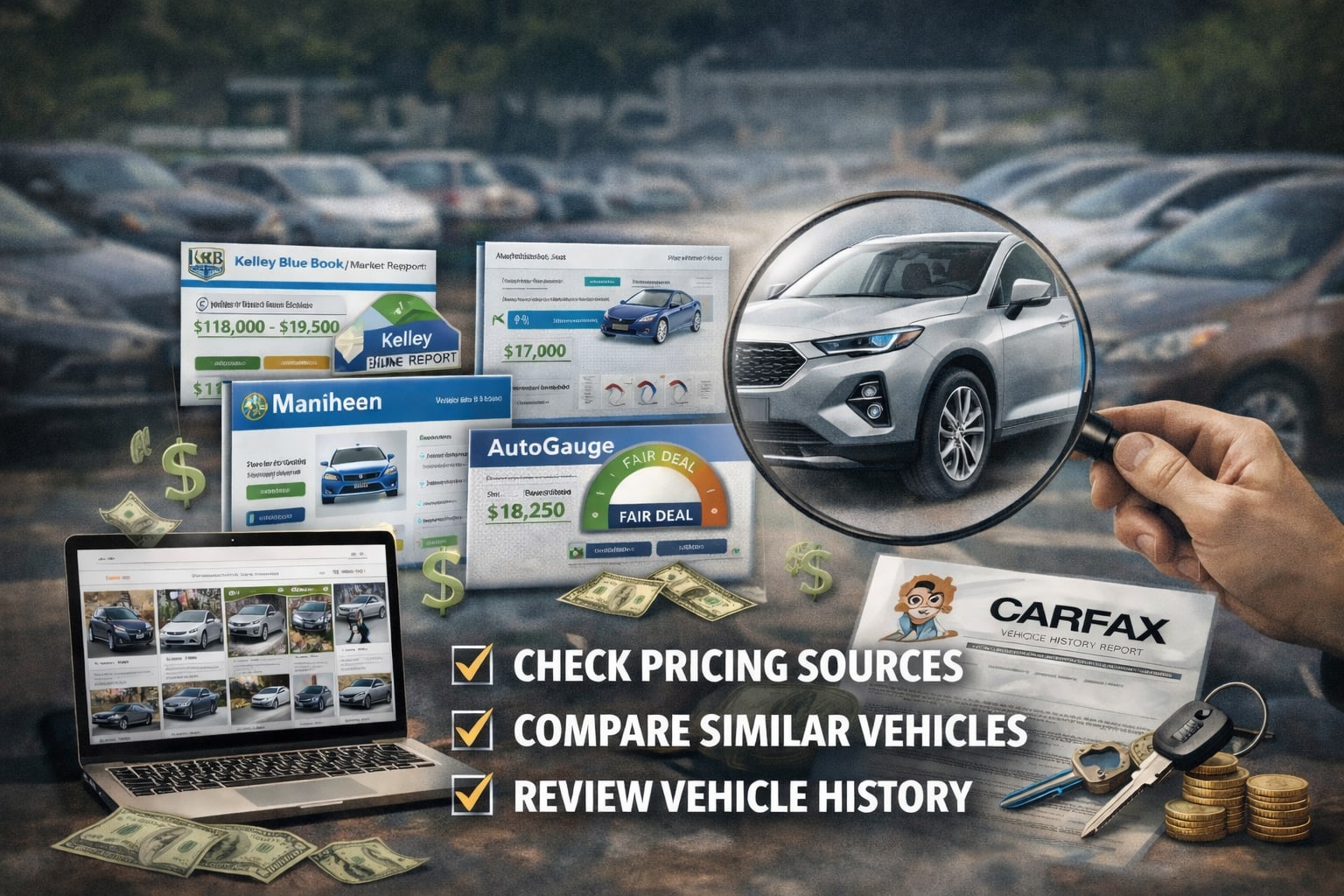
- Wholesale market data, such as Manheim market reports
- Retail benchmarks from tools like KBB
- Industry insights from pricing tools such as AutoGauge
- Live marketplace pricing reflecting local buyer behavior
Each source provides a different perspective. Wholesale data shows dealer-level pricing, retail tools reflect consumer expectations, and local marketplaces reveal what buyers are actually paying in real time.
Swoopa adds another layer by analyzing private-market pricing derived from local Facebook Marketplace data. This helps buyers understand real demand at the neighborhood level rather than relying solely on national averages.
Using multiple sources is the best way to evaluate the used car value accurately.
Compare Similar Vehicles
True valuation depends on accurate comparisons. Buyers should focus on aligning key details before drawing pricing conclusions:
- Match trim levels and feature packages
Base trims and premium trims can differ significantly in value due to technology, safety features, drivetrains, and interior upgrades. Comparing mismatched trims often creates false price expectations. - Compare mileage ranges realistically
Exact mileage matches are rare. Instead, evaluate vehicles within reasonable mileage bands and consider how usage patterns and maintenance history influence long-term value. - Adjust pricing based on documented condition differences
Exterior wear, interior condition, tire life, and upcoming maintenance all affect value. Even small condition issues can justify noticeable price adjustments between similar listings. - Account for optional equipment and add-ons
Factory-installed options typically hold more value than cosmetic or aftermarket additions, which may not increase resale worth. - Use multiple comparable listings, not one example
Reviewing several similar vehicles helps identify pricing trends rather than outliers that distort perceived value.
A base model and a premium trim are not interchangeable, even if they share the same year and mileage. Comparing mismatched listings often leads to inaccurate conclusions and poor buying decisions.
Data-driven comparison prevents emotional decision-making and helps buyers determine how to know if a car is priced fairly. When buyers rely on structured comparisons instead of assumptions, they gain clearer insights, stronger negotiation leverage, and greater confidence before committing.
Watch for Red Flags That Inflate Vehicle Prices
Some listings appear attractive but are priced above true value due to perception tactics.
Common red flags include:
- Cosmetic upgrades that don’t improve mechanical value
- Low-demand models are priced aggressively due to seller bias
- Emotional pricing based on personal attachment rather than market data
Sellers may highlight rarity or aesthetics to justify inflated pricing. Buyers who understand car pricing factors can separate marketing language from real value indicators.
Negotiation Tips Based on True Vehicle Value
Accurate valuation strengthens negotiation leverage.
When buyers reference multiple data points, they can:
- Justify counteroffers with objective evidence
- Avoid reacting emotionally to limited-time pressure
- Focus discussions on value rather than opinion
Knowing how to check a car’s real value before buying shifts negotiations from confrontation to informed discussion. Sellers are more receptive when buyers present facts instead of assumptions.
FAQs
A car is likely overpriced if its asking price exceeds comparable listings after adjusting for mileage, condition, and location. Cross-checking wholesale data, retail estimates, and local marketplace pricing helps identify inflated listings.
The most accurate approach combines multiple sources. Using wholesale data, retail benchmarks, and real-world marketplace pricing provides a balanced view that reflects both professional and consumer demand.
Mileage often has a greater impact than age, but condition and maintenance history matter just as much. A newer vehicle with poor upkeep may be worth less than an older, well-maintained one.
Online tools are helpful starting points, but they should not be used alone. Values vary by region and demand, so combining tools with local pricing data improves accuracy.
Negotiation range depends on market demand and seller motivation. Buyers using strong valuation data can often negotiate more effectively than those relying on asking prices alone.
Final Thoughts & Next Steps
Evaluating a vehicle’s true value requires more than checking a single price estimate. Buyers who research deeply, compare multiple sources, and understand market behavior are far better equipped to avoid overpaying.
By analyzing wholesale trends, retail benchmarks, and real-world marketplace data, buyers gain a clearer picture of actual value. Tools that surface local private-market pricing add valuable context, especially in fast-moving markets.
Before committing, take the time to:
- Compare similar vehicles carefully
- Validate pricing across multiple sources
- Separate perceived value from real demand
A disciplined approach to vehicle valuation leads to smarter decisions, stronger negotiations, and better long-term outcomes.
You May Like
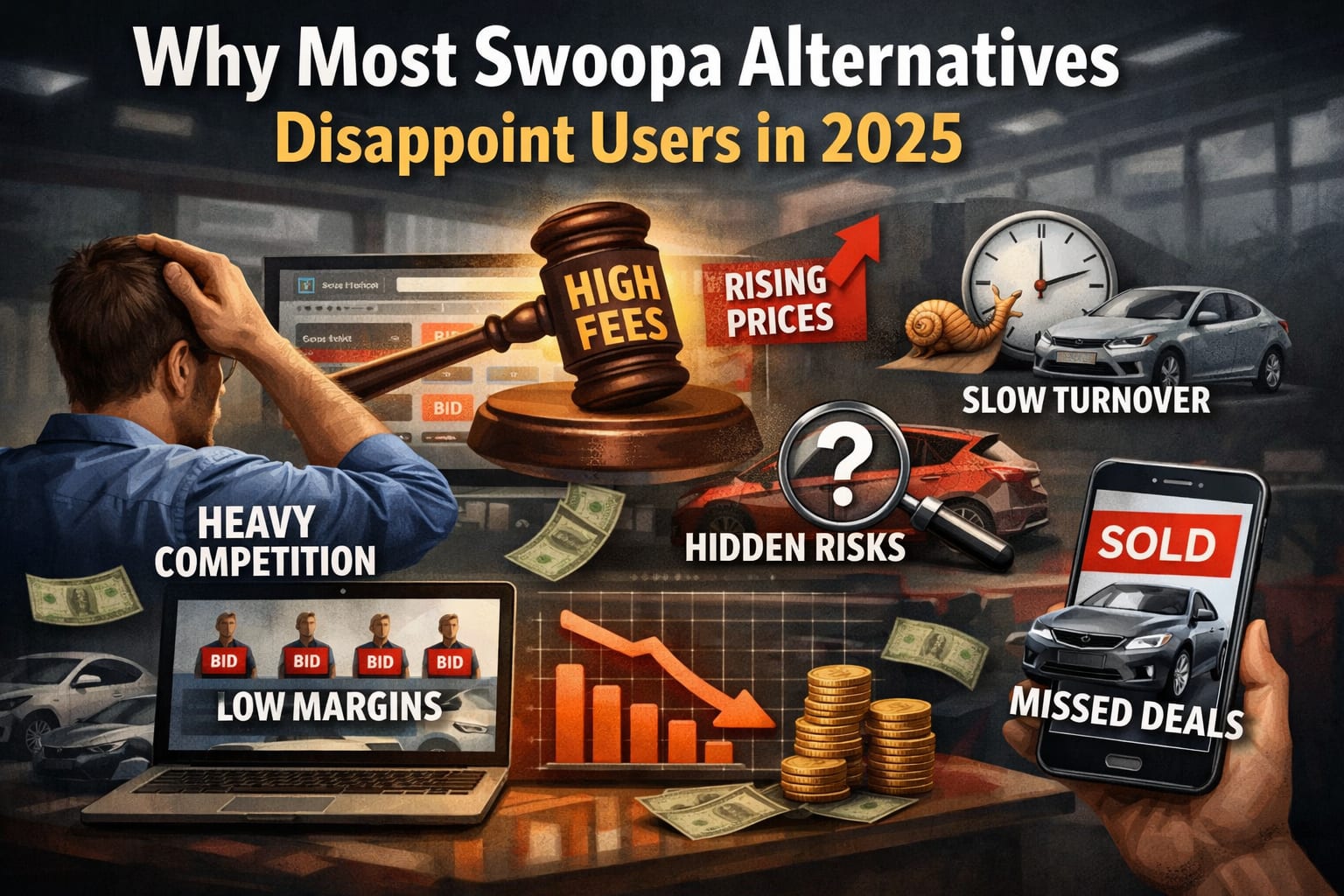
Why Most Swoopa Alternatives Disappoint Users in 2025
In 2025, online flipping has evolved from a casual side hustle into a full-blown digital economy. It’s a movement where everyday people are turning used items, clearance deals, and even digital
How to Evaluate a Vehicle’s True Value Before Buying
In 2025, online flipping has evolved from a casual side hustle into a full-blown digital economy. It’s a movement where everyday people are turning used items, clearance deals, and even digital
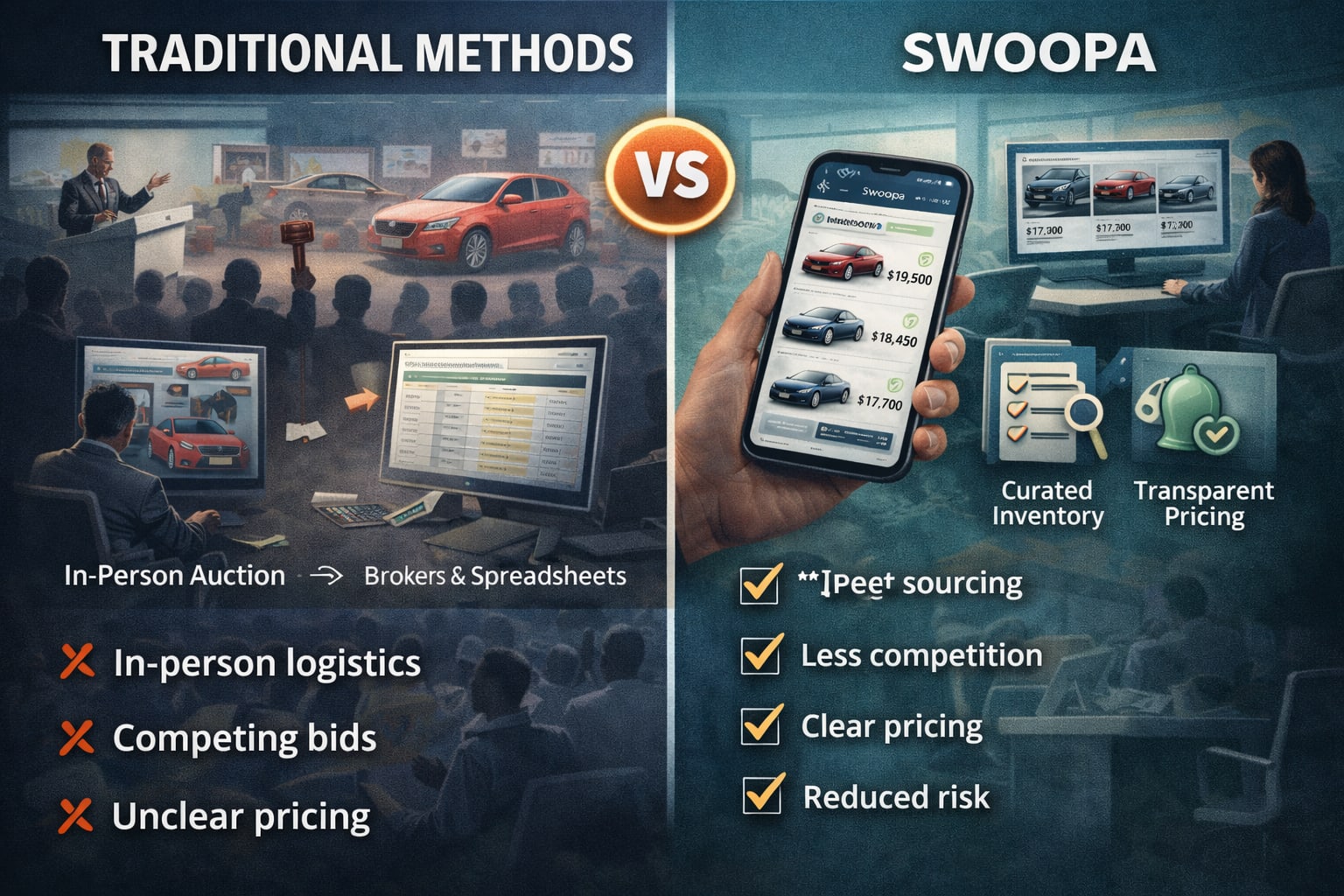
Swoopa vs Other Alternatives: A Smarter Way to Source Vehicles
In 2025, online flipping has evolved from a casual side hustle into a full-blown digital economy. It’s a movement where everyday people are turning used items, clearance deals, and even digital